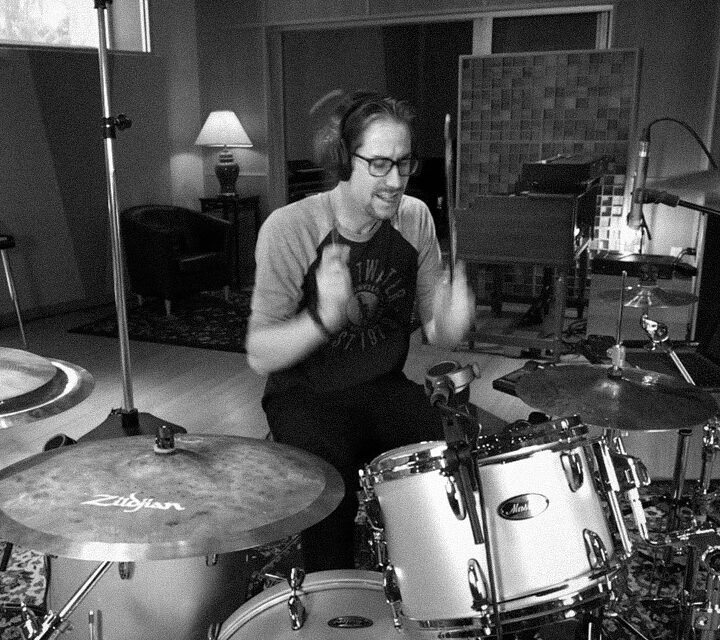
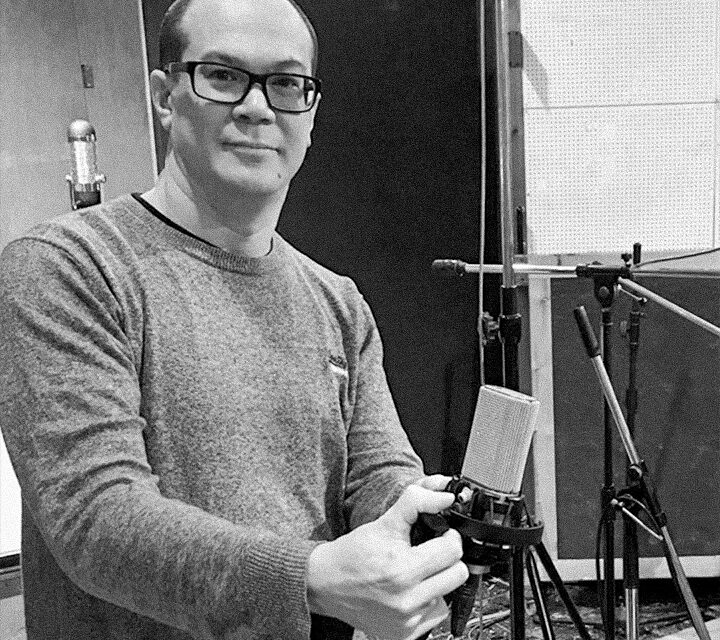
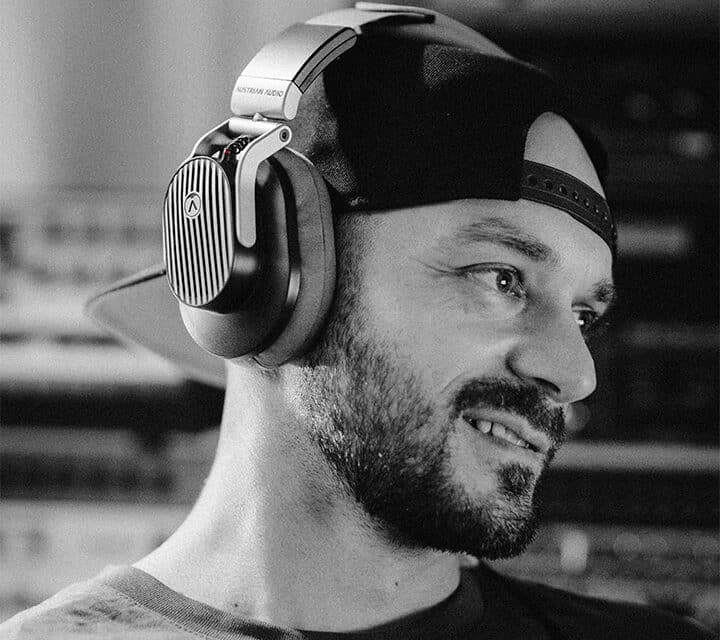
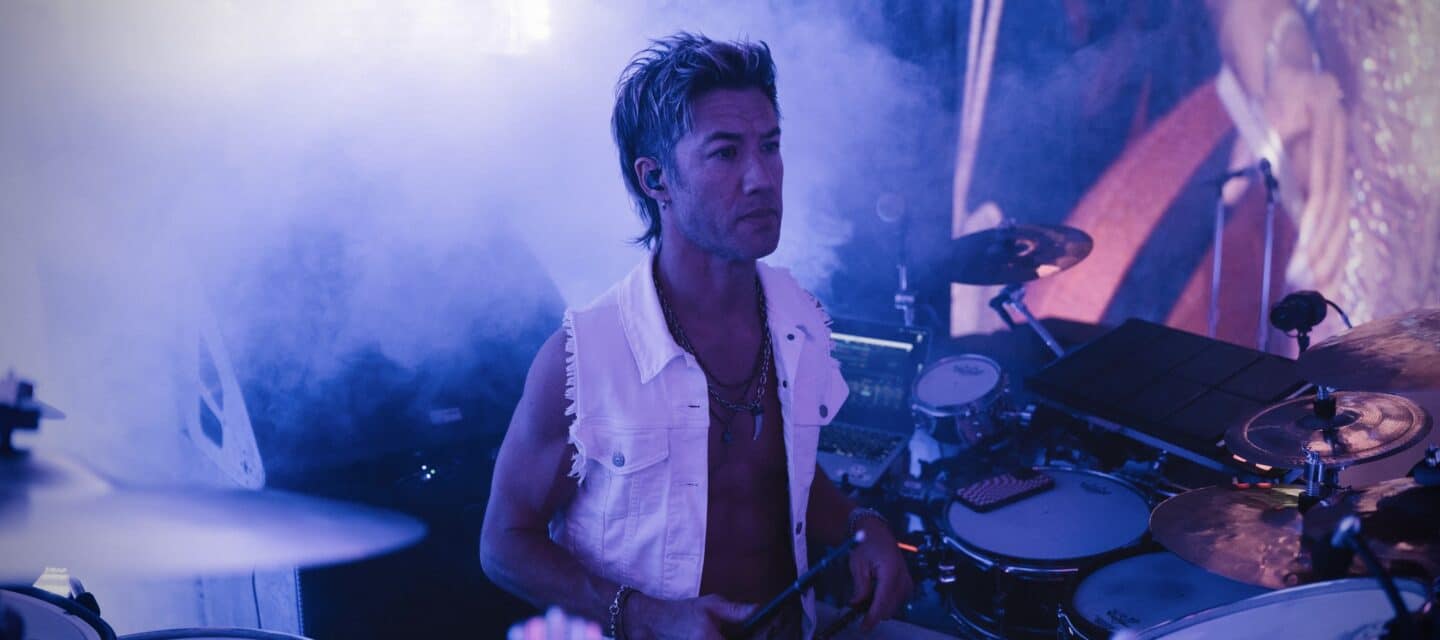
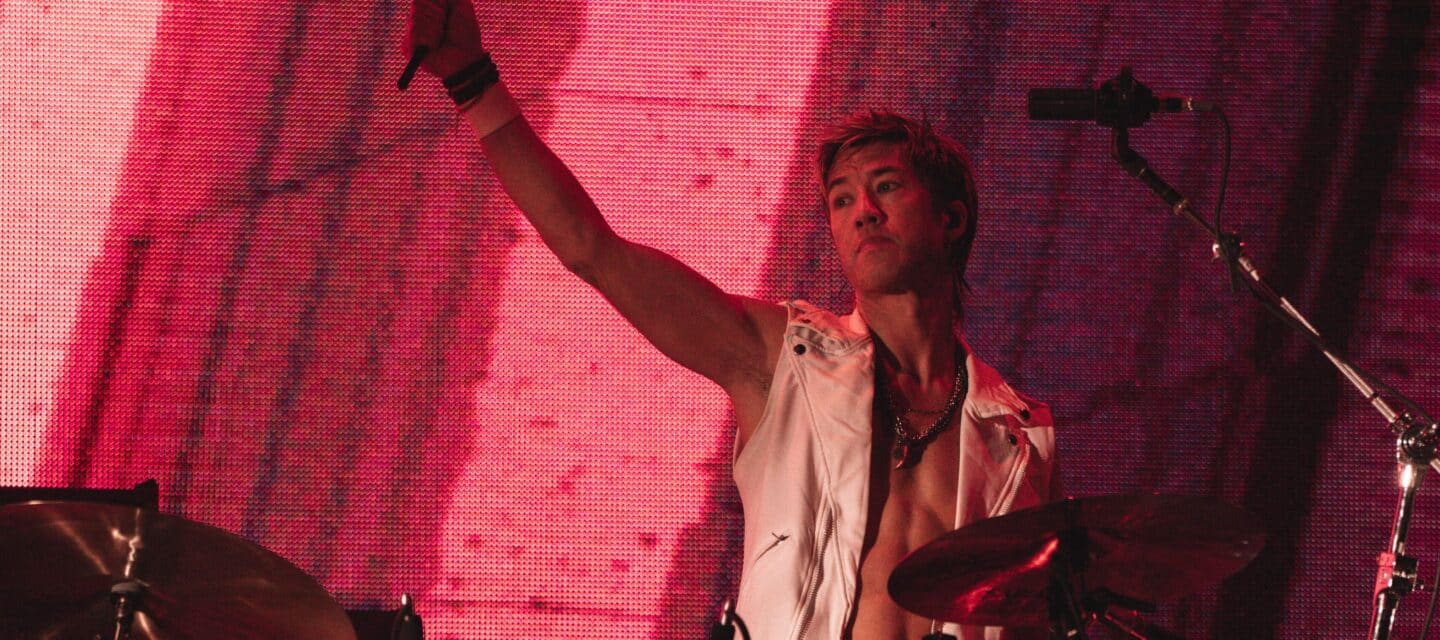
Brendan Buckley is an absolute powerhouse behind the kit and a fixture in the international music industry for decades. His credits read like a who’s who of pop, rock, and alternative music—having performed and recorded with superstars such as Shakira, Morrissey, Tegan & Sara, and Perry Farrell. Alongside his music career, he is a passionate Brazilian Jiu-Jitsu black belt and shares his knowledge as an in-demand drum teacher and through projects like DrummerPlusDrummer.
What happens when you combine decades of elite studio and live experience with an uncompromising demand for sound quality? We sat down with Brendan to talk about his workflow, his musical journey, and how our gear fits into his setup.
Here is the interview!
Austrian Audio:
You’ve worked with absolute global superstars like Shakira and Morrissey—from massive pop productions to indie rock. How has your approach to drum sound in the studio changed over the years, especially regarding miking and capturing true dynamics?
Bendan:
My recording career started in the 1990’s. During that “grunge” era, things were a bit rougher. Musicians hit a lot harder. Sounds were a bit more abrasive. I think that, over the years, I have embraced the beauty of dynamics (both soft and loud), wider tuning ranges (deep and low to high and cutting), and the control of overtones (dead sounds vs wide open). It’s important to hear the sound in your head, and then search for it.
Austrian Audio:
There are worlds between a massive live show with Perry Farrell and focused studio work. What is the biggest challenge for you when translating your signature sound from the stage to the studio room, or vice versa?
Brendan:
I don’t find it to be a challenge per se, but I do consider the two environments to be distinct. In the studio, we are creating and capturing “ideas”. Tones, rhythms, parts, arrangements. It’s all part of the construction of a song, or an album. For live concerts, we are creating a show. Sound is still important, but we are considering what it will sound like through a giant P/A system, not on earbuds or a stereo system. There are also visual aspects to consider. How will this impact an audience? And, can these tones and parts be replicated night after night? Is what we are doing durable and replicable? Another thing to consider is that drums are the foundational support for an entire band. Am I making the rest of the musicians comfortable enough on stage so that they can perform at their own highest abilities?
Austrian Audio:
What does a microphone or equipment setup need to deliver for you to say immediately in the hectic studio day-to-day: This works?
Brendan:
There is the durability issue. Do the mics work correctly and remain in place each day? Also, do they capture the sound of the instruments in a pleasing manner? For drum recording, I was always taught that it goes in this order: well-tuned gear, well-played parts, good microphone selection and placement, mic preamps. If that is done correctly, the mixing engineer should have plenty of good music to work with.
Austrian Audio:
Aside from your countless credits, you are also a Jiu-Jitsu black belt and share a lot of knowledge as a teacher. Are there parallels between the mental discipline in martial arts and the precision needed as a top drummer?
Brendan:
There are indeed many parallels between music and martial arts. Firstly, you must embrace the idea that it is an endless journey. You never stop learning. You never have it all figured out. You are a student for life. Also, you have to be OK with losing. Some days are better than others. If you fail, you just use it as a learning experience and try again tomorrow.
Austrian Audio:
You work a lot with other musicians and projects like DrummerPlusDrummer. What crucial advice do you give to young talents trying to gain a foothold in the modern music business today?
Brendan:
There are so many things that I could say here. But the first piece of advice that popped into my mind is “Do not be concerned with pleasing everyone”. It is an impossible task. It is more important to develop your own artistic taste, and to work hard and create art that you are proud of. Make good, quality stuff.
Austrian Audio:
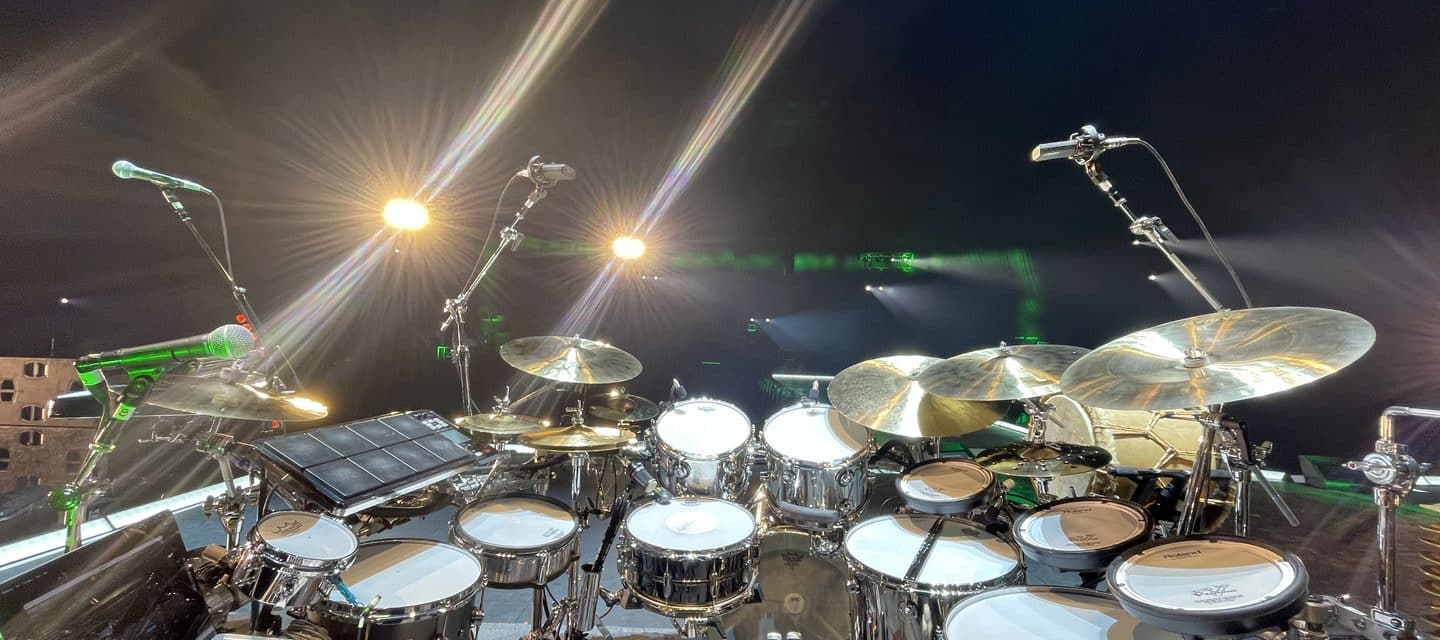
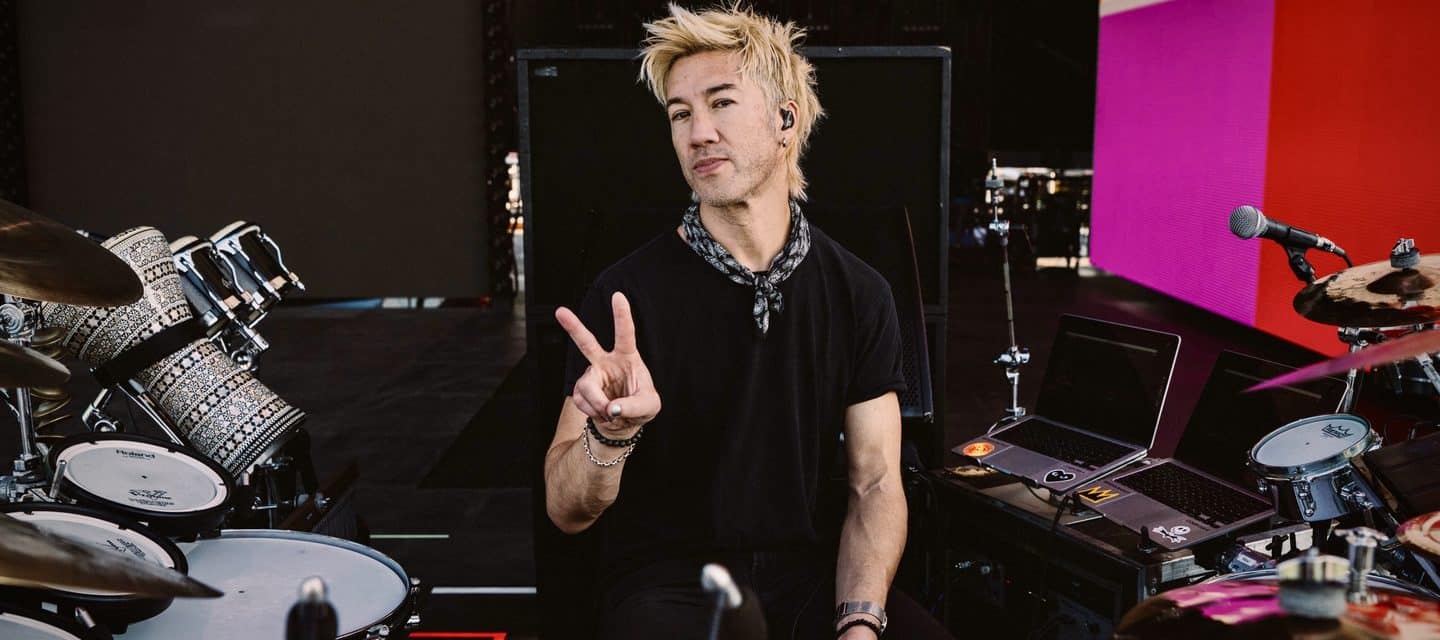
You use a hybrid setup of acoustic and triggered drums. When blending the natural sound and the triggered sound of the kick and snare together, do you actively check and adjust their phase relationship?
Brendan:
Yes. When stacking several kick drum samples, I will check the phase correlation to make sure we are not losing the low end. And when combining samples with live acoustic drums, the front house engineer and I will check the attack transients to make sure that they are not flamming (attacking at a noticeably different time). These problems can be improved in many ways: adjusting the sample start time, rolling off some of the sample’s attack transient, lowering the latency of the sampler, or time-aligning the sounds at the front house world.
Austrian Audio:
Why don’t you use a MIDI footswitch to change song presets in the Kontakt Player?
Brendan:
My favorite drum sampler for Shakira’s show is Native Instrument Battery 4. I have been using it since 2011 (Battery 3). Unless I am mistaken, it does not allow for a footswitch to change the patches. I just got accustomed to using the MacBook track pad to scroll through the setlist of sample patches. I have tried other softer samplers, but I always seem to come back to Battery 4. The lay-out and workflow suits me.
Austrian Audio:
What is the wedge monitor behind you used for? Is it primarily for you to get a better physical vibe and feel?
Brendan:
Yes. I have been using hybrid electronics on stage since around 1994. And one thing I learned early on is that electronic pads sound very dull on stage (meaning they do not give the drummer nor the rest of the band the same impact as acoustic drums). To remedy this, I began using a wedge and a sub on my drum riser to equalize the on-stage volumes of my eKick and acoustic Kick, eSnare and acoustic Snare, etc. It really helps make hybrid drumming a more enjoyable experience for all.
Austrian Audio:
What kind of click track do you use? Do you incorporate count-ins, vocal cues, or song information on the track?
Brendan:
I have been using the same click track sound since 2001. It’s a sample of a rim click (cross stick). Louder quarter notes with softer eighth notes. It’s a pleasing sound that blends into the song (unlike an electronic bleep, or a ringy cowbell). Regarding a “slate track”, I avoid using them as much as possible. I don’t need a computer to tell me where I am every four measures. My preference is to have a song title at the beginning, and then a count-off. That’s it. I should be able to remember the rest of the song form.
Austrian Audio:
Can you give us some drum tuning advice? Do you have a special method for getting your kit sounding dialed in?
Brendan:
Every drum has a sweet spot. Not too high, not too low. I look for that spot. For rack and floor toms, I used to use gaffer tape and moon gel to dampen the top head. But now, I prefer dropping cotton balls inside the drum to slightly dampen the bottom resonant head instead. I think it is a more pleasant sound. For cymbals, I prefer thinner, darker cymbals. So much of the white noise from your cymbals winds up bleeding into the lead vocalist’s mic. That can destroy a live mix. I try to select a batch of cymbals that will blend nicely with the overall stage volume. For live shows, I like deep bass drums with a packing blanket inside and a 5” to 7” hole in the front head. I like snare drums to have a bit of weight to them (not just rim-shot high end). It takes a bit of experimentation to find the right amount of buzz, articulation, low-end, and high-end.
Austrian Audio:
Is your hi-hat microphone used heavily in the FOH mix, or does the hi-hat cut through the overheads enough on its own?
Brendan:
I think a ride cymbal or hi hat will be picked up sufficiently through a nice pair of overheads. But it is useful for have individual mics for extra EQ and panning purposes.

Austrian Audio:
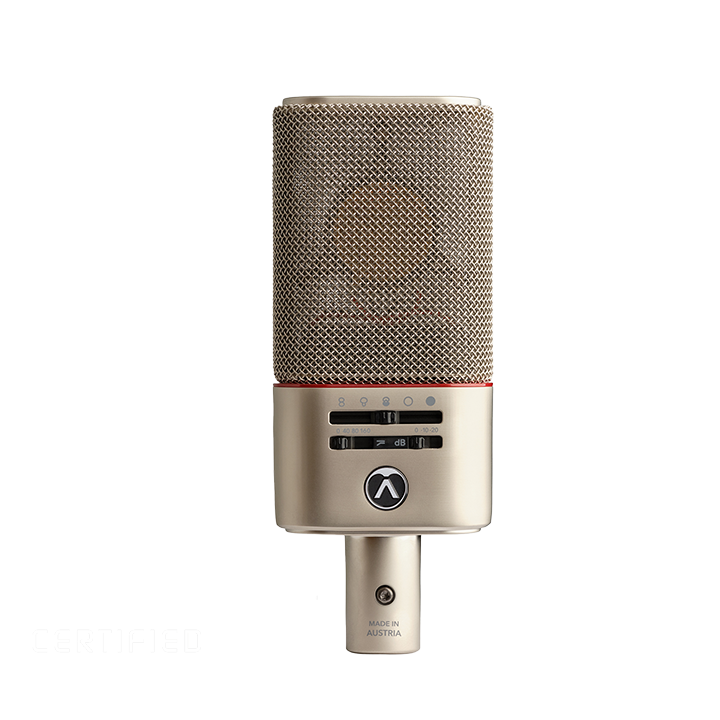
Why use a Large Diaphragm Condenser (LDC) as an overhead mic?
Brendan:
I asked my front house engineer Bill Sheppell his thoughts on this question. He responded, “The LDC mics are warmer than SDC if you can run the high-pass filter down a bit, that being based on stage monitor level. They also sound smoother than SDC mics overall in my opinion, even with the high pass up higher, and the OC 18’s just sound great.
Austrian Audio:
What is the polar pattern of the overhead mics in your setup?
Brendan:
We are using cardioid mics. Cardioids reject stage and room noise better than other polar patterns, so they seem to fit the bill.
Austrian Audio:
What do you think of the OCS8 shock mounts?
Bill Sheppell:
I like them overall. They could be a bit stiffer in holding the mic in position, if the mic cable is a bit too taut. Keep up on tightening the screws, and they’re good.
Austrian Audio:
What’s your biggest headache when it comes to drum mics?
Brendan:
The biggest headache might be mics that have clunky or cumbersome clamps (the ones that always seem to loosen or get in the way).
Austrian Audio:
What sort of snare mic is that? – And why?
Brendan:
We use a Heil PR31 BW on both the main snare drum and the side snare drum. The Heil sounds like an SM-57 on steroids. People seem to like the snare sound that we’re getting, so the set-up appears to be working.
Austrian Audio:
What percentage of the time do you play on real acoustic drums versus electronic triggers?
Brendan:
For this current Shakira tour (2024-2027), I’d say it’s about a 50/50 split. But it all depends on the ever-changing setlist.
Austrian Audio:
Are there combinations of real drums and electronic drums during a song? Do they blend together well?
Brendan:
Yes, I often play combinations of acoustic and electronic sounds at the same time. For instance, on “Whenever Wherever” I play an acoustic drumset, except my right foot is on an eKick pedal instead of an acoustic bass drum. And for the song “Can’t Remember to Forget You”, I play electronic drums on the verses and switch the the acoustic drums on the choruses. Everyone song is different.